

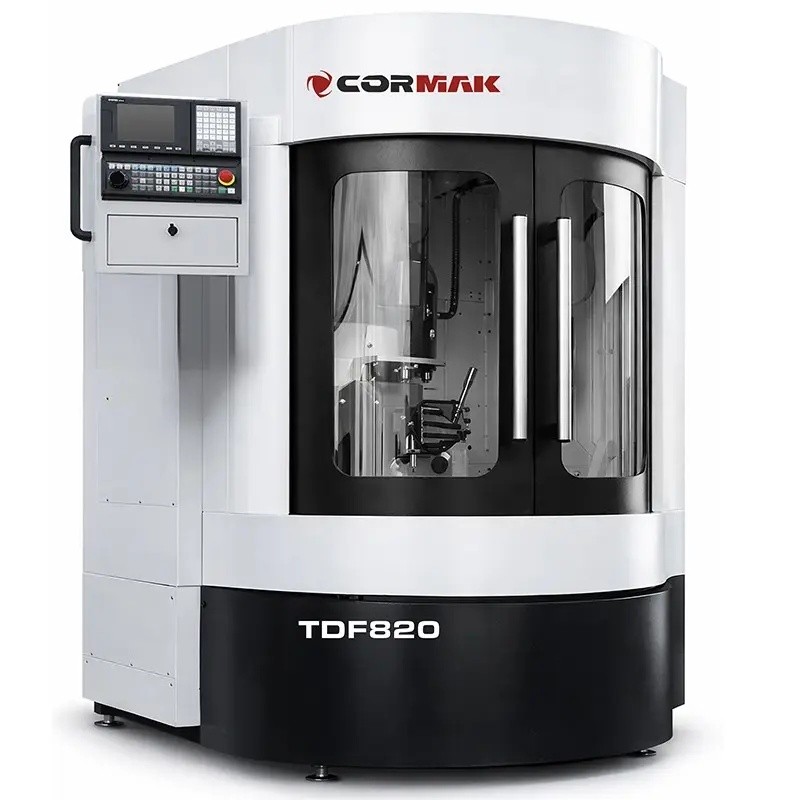
Alloy wheels are among the most heavily exposed components of a vehicle. Kerb damage, mechanical impacts, corrosion and years of use can cause even premium wheels to lose their original appearance. Professional refurbishment workshops increasingly use CNC technology to achieve consistent results and a high-quality finish that is difficult to reproduce manually. CNC wheel diamond cutting has become an essential stage in professional alloy wheel refurbishment, particularly when restoring precision-machined wheel faces.
Alloy wheels are among the most heavily exposed components of a vehicle. Kerb contact, mechanical damage, corrosion and years of use can cause even premium wheels to lose their original appearance. Modern wheel refurbishment workshops increasingly use CNC technology, which provides high repeatability and a surface finish that is difficult to achieve through manual machining. CNC wheel cutting has become one of the most important stages of professional aluminium alloy wheel refurbishment.
Why has CNC technology transformed wheel refurbishment?
Until relatively recently, wheel refurbishment relied mainly on manual sanding and painting. Today, CNC wheel cutting plays an increasingly important role because it can accurately reproduce the distinctive Diamond Cut finish. Numerical control reduces unpredictable variations and makes it possible to achieve consistent results across successive wheels.
Modern CNC lathes can achieve machining accuracy measured in hundredths of a millimetre when the machine, tooling and workholding are suitable. This enables the operator to remove a thin layer of material from the wheel face while retaining its geometry and appearance within the limits of the wheel's condition. Such machines are used in specialist wheel refurbishment workshops and in facilities manufacturing aluminium components. More information about machining parameters can be found in our article on turning on CNC lathes.
What does CNC wheel face cutting involve?
The most recognisable stage of refurbishment is CNC diamond cutting of the wheel face. This involves precisely removing a very thin layer of aluminium from the visible front surface. It can eliminate minor scratches, corrosion marks and surface irregularities caused by use.
Correct cutting parameters, insert selection and spindle speed are essential. Excessively aggressive machining can remove too much material, while unsuitable feed rates may prevent the required finish from being achieved. This is why professional alloy wheel cutting is performed on CNC-controlled machines that allow accurate control over every stage.
After machining, the wheel face displays the characteristic uniform cutting marks associated with Diamond Cut alloy wheels.
How does professional CNC wheel refurbishment work?
Complete CNC alloy wheel refurbishment involves more than diamond cutting alone. The process consists of several successive technical operations.
First, the wheel is thoroughly cleaned to remove paint, dirt and remnants of protective coatings. Its technical condition is then assessed, including checks for cracks, deformation and other damage that may require further action. Whether a repair is permissible must be determined according to the wheel manufacturer's instructions and the wheel's condition.
Only after preparation does CNC cutting take place to restore the required wheel-face finish. Following machining, the wheel is painted and given a protective clear lacquer to shield the aluminium from corrosion and weather exposure.
Numerical control allows the workshop to achieve repeatable results, shorten machining time and carefully limit the quantity of material removed from the wheel.
CNC lathe for alloy wheels – what can it do?
Choosing the appropriate machine is fundamental to effective refurbishment. A specialist CNC lathe for alloy wheels is designed to machine wheels of different diameters and configurations.
Depending on the model, these machines may include dedicated clamping equipment, measuring probes, automatic lubrication systems and software that assists with toolpath generation. These features help the operator prepare the machine efficiently and achieve a high-quality finish, provided the wheel is correctly secured and the work is carried out safely.
For workshops refurbishing large numbers of wheels, automation and shorter changeover times are particularly valuable, as they directly influence business productivity.
Summary
Increasing market expectations mean that professional wheel refurbishment relies more and more on CNC technology. CNC wheel refurbishment, including precision cutting of wheel faces, makes it possible to restore appearance and surface quality with high repeatability. The appropriate machine and the operator's experience determine the final result. Investing in modern CNC solutions from an established industrial machinery manufacturer therefore represents an important development opportunity for businesses specialising in aluminium alloy wheels.
