


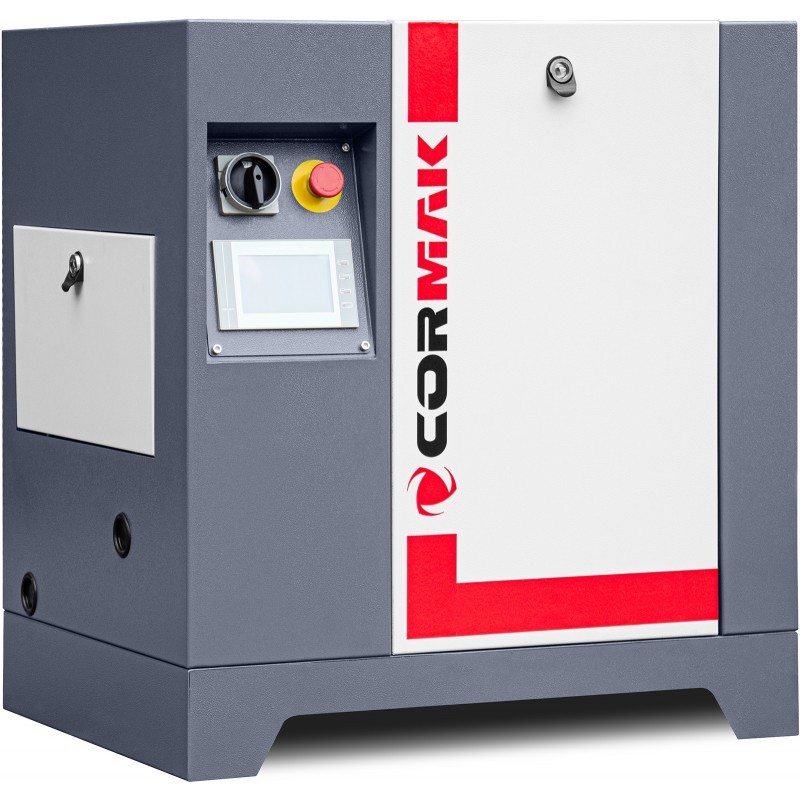
The selection of a screw compressor for a fibre laser has a direct impact on cutting stability, edge quality and the operating costs of the entire system. In many facilities, compressed air is used not only to power pneumatic systems, but also as an auxiliary gas in the cutting process. Therefore, a properly selected compressed air system is one of the key pieces of equipment when working with laser technology.
The selection of a screw compressor for a fibre laser has a direct impact on cutting stability, edge quality and the running costs of the entire system. In many factories, compressed air is used not only to power pneumatic systems but also as an auxiliary gas in the cutting process. Therefore, a properly selected compressed air system is one of the key pieces of equipment when working with laser technology.
Modern fibre lasers enable fast and precise cutting of sheet metal and profiles, but require a stable air supply with the appropriate pressure, flow rate and quality. A compressor that is too weak causes pressure drops, poorer edge quality, increased burr formation and the risk of downtime. Conversely, a compressor that is too large can result in unnecessary energy consumption, particularly if it is not tailored to the facility’s actual operating profile.
Why does a fibre laser need compressed air?
In laser machines, compressed air can serve several functions. It powers pneumatic components, supports system purging, helps protect the cutting head and can be used as an auxiliary gas in the cutting process. The greatest demand occurs when the air is used directly to cut the material.
During operation, the air jet removes molten material from the kerf, cools the working area and affects the appearance of the edges. If the pressure or flow rate is too low, the laser will not operate stably. This can lead to scorching, an uneven surface, problems with penetrating the material and reduced productivity in manufacturing processes.
How do you select the right compressor capacity for a fibre laser?
The selection should be based on the laser cutter manufacturer’s documentation. This is where you should check the required pressure, air flow rate and recommendations regarding the quality of the medium. A compact fibre laser cutter for thin sheet metal will have different requirements to a higher-power machine operating in continuous mode.
In practice, the compressor’s capacity should exceed the maximum demand of the laser and other equipment in the workshop. A good approach is to allow for a margin of around 20–30 per cent, unless the machine manufacturer recommends otherwise. This ensures that the compressor is not constantly operating at full capacity, which helps to maintain stable pressure and has a positive effect on the unit’s service life.
For example, if a fibre laser consumes 2.5 m³/min of air and additional equipment in the workshop requires 0.5 m³/min, the total demand is 3.0 m³/min. When adding a safety margin, it is worth considering a compressor with a capacity of approximately 3.6–4.0 m³/min at the required operating pressure. However, the final selection should always be confirmed against the requirements of the specific cutting machine and installation.
Pressure, air quality and filtration
Capacity alone is not enough. With fibre lasers, the quality of the compressed air is very important. Moisture, oil or dust can adversely affect the cutting head, lenses, valves and the final cutting result. Therefore, the system should include not only a compressor but also a buffer tank, a dryer, fine filters and – depending on requirements – a carbon filter.
Proper air preparation enables more stable and safer operation of a fibre laser. The correct pressure and purity parameters help maintain high cutting quality, minimise downtime and reduce the risk of failure in costly components.
It is worth bearing in mind that air requirements may vary depending on the type of material being processed, the thickness of the sheet metal and the machine settings. Different conditions will be required for thin carbon steel, aluminium and stainless steel respectively. Before purchasing, it is advisable to analyse typical jobs, laser operating time and planned production growth to ensure that the screw compressor does not limit the cutting machine’s capabilities.
Fixed-speed compressor or inverter-controlled compressor?
For a fibre laser, it is often worth considering a screw compressor with an inverter. This design adjusts the output to the current air demand, which can reduce energy consumption. This is particularly important where the laser does not operate at a constant load throughout the day, or where the compressor also supplies other consumers.
A fixed-speed compressor can be a good solution when air demand is stable and easy to predict. In variable operating modes, variable-speed models generally allow the compressor’s operation to be better tailored to the system, compared with conventional units operating in an on/off cycle.
The use of screw compressors with fibre lasers
Screw compressors are often chosen for fibre lasers due to their stable operation, high efficiency and ability to run continuously. A suitably selected unit ensures consistent pressure, quiet operation and low vibration levels. This is particularly important for businesses that use laser cutting technology on a daily basis.
As laser power increases, so does the demand for air, particularly when cutting thicker materials. It is therefore not advisable to select a compressor that is ‘just enough’. Insufficient capacity reserves may limit the machine’s capabilities and negatively impact production efficiency.
Users search for this type of equipment using various terms, sometimes entering the incorrect phrase ‘kombresor śrubowy’ instead of the correct term ‘screw compressor’. Regardless of the name, the most important factors for a fibre laser are: stable pressure, adequate capacity, effective filtration and dry compressed air.
The most common mistakes when selecting a compressor for a laser
The most common mistake is selecting a compressor based solely on motor power. For a fibre laser, actual capacity at the required pressure is more important. The second mistake is a lack of flow reserve, which means the compressor is constantly operating at the limit of its capacity.
Another common problem is neglecting air treatment. The compressor alone is not enough if the system lacks a dehumidifier, filters and proper condensate drainage. It is also worth avoiding a buffer tank that is too small, incorrect pipe diameters and long installation runs that cause pressure drops.
Summary
When selecting a screw compressor for a fibre laser, one must take into account the required pressure, actual air consumption, the machine’s operating mode, the quality of filtration and any additional air consumers in the facility. The safest option is to choose a unit with an adequate capacity margin, a dehumidifier, filters and a well-matched air receiver.
A well-designed compressed air system helps to maintain stable laser operation, improve edge quality and reduce running costs. In intensive screw compressor operation, it is not only power that matters, but above all capacity at the correct pressure and the purity of the air supplied.
