


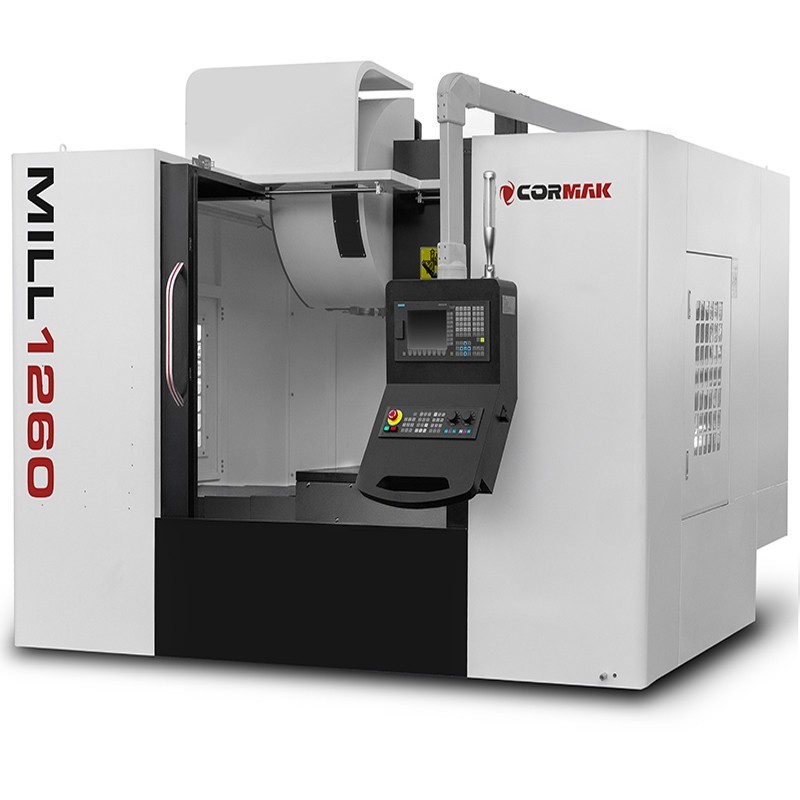
Computer numerical control (CNC) has transformed manufacturing worldwide, ushering in a new era of precision, efficiency and automation. Although this technology is not new, it is constantly evolving and finding applications in ever-new areas of industry. From the automotive sector to aerospace, from the manufacture of medical equipment to the creation of architectural components – CNC machining centres have become an indispensable tool in modern manufacturing processes.
Computer numerical control (CNC) has transformed manufacturing worldwide, ushering in a new era of precision, efficiency and automation. Although this technology is not new, it is constantly evolving and finding applications in ever-new areas of industry. From the automotive sector to aerospace, from the manufacture of medical equipment to the creation of architectural components – CNC machining centres have become an indispensable tool in modern manufacturing processes.
1. Automotive and Transport
In the automotive industry, where accuracy and repeatability are crucial, CNC machining centres enable the production of parts with tight tolerances. Components such as engine blocks, gearboxes and suspension parts are manufactured with exceptional precision, which translates into vehicle performance, safety and durability.
2. Aerospace
The aerospace industry must comply with stringent standards and regulations. Thanks to CNC capabilities, manufacturers can produce complex parts from lightweight materials such as titanium or aluminium alloys, which are crucial for the efficiency and strength of aircraft.
3. Medicine
CNC machining centres are also used in medicine, where precision has a direct impact on patients’ health and lives. They are used to produce implants, surgical instruments and complex medical devices that require absolute precision.
4. Electronics
In the manufacture of electronic devices, where components are often microscopic in size, CNC enables the accurate and rapid production of precision parts that are essential for modern gadgets and communication devices.
5. Construction and Architecture
CNC is also used in construction, particularly in the creation of complex structural and decorative elements. The ability to rapidly prototype and produce bespoke items enables architects and designers to realise even the most ambitious projects.
6. Art and Crafts
Artistic applications of CNC are proof that this technology is not limited to typical industrial sectors. Sculptors and designers use CNC to create intricate works of art that would take considerably longer to produce using traditional methods.
Questions and Answers
What are the main benefits of using CNC in various industries?
-
The main benefits include a significant improvement in precision, a substantial reduction in production time, greater repeatability and the ability to automate processes.
Is CNC technology accessible to small businesses?
-
Yes, the development of CNC technology and the fall in equipment costs mean that even small businesses can benefit from these solutions.
How does CNC machining differ from traditional machining methods?
-
CNC machining offers higher precision, is faster and allows for production automation, which is difficult to achieve with traditional methods.
Are there any limitations to CNC machining?
-
Despite its many advantages, CNC machining can be limited by investment costs, the need for specialist operator training, and material constraints.
What future trends might influence the development of CNC technology?
-
Future trends include integration with technologies such as 3D printing, artificial intelligence and automation, which will further enhance the capabilities and efficiency of CNC production.
Conclusions
CNC machining centres are not just the future of industrial manufacturing; they are already its present. Their adaptability across various industrial sectors makes them invaluable in today’s rapidly changing economy. As technology advances, we can expect even greater penetration of these systems into new industries, opening up new opportunities for innovation and growth.
