


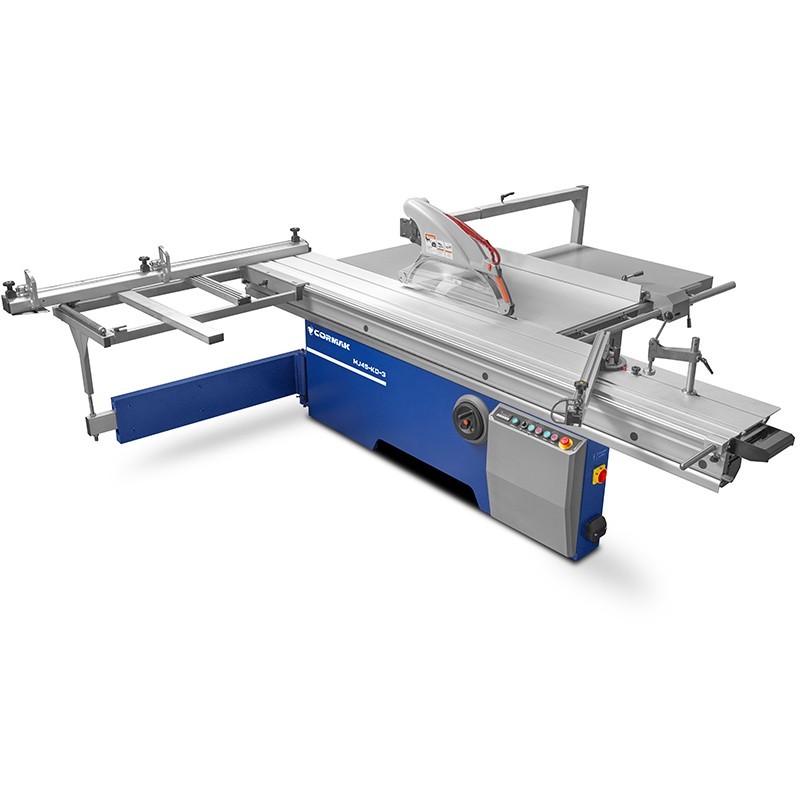
The condition of the blade has a direct impact on the quality of the cut, the speed of work and the operator’s safety. Even a well-adjusted panel saw will not produce a clean edge if the teeth are blunt, dirty or damaged. In furniture production, the problem quickly becomes apparent: the number of reworks increases, the material is harder to feed through, and the laminate begins to flake.
The condition of the blade has a direct impact on the quality of the cut, the speed of work and the operator’s safety. Even a well-adjusted panel saw will not produce a clean edge if the teeth are blunt, dirty or damaged. In furniture production, the problem quickly becomes apparent: the number of reworks increases, the material becomes harder to feed through, and the laminate starts to flake off.
Not every defect means you need to buy a new blade. Sometimes, a thorough clean or professional sharpening is enough. However, there are situations where continuing to work with the blade increases the risk of damage to the board, the machine and the operator themselves.
Signs of a dull blade
The first sign is a deterioration in the quality of the cut edge. With laminated boards, chips and flaking of the decorative finish appear, particularly on the underside of the material. In solid wood, the edge becomes ragged, and the fibres are torn out rather than cut cleanly.
It is also worth paying attention to any resistance when feeding the board. If the material is noticeably harder to feed than before, and the motor is running louder, the panel saw blade may not be removing material effectively. Another sign is scorching along the edge of the timber and the characteristic smell of overheating.
Worn teeth often produce more fine dust as well. A sharp blade produces regular chips, whilst a blunt one tends to grind the material rather than cut through it. However, you should not judge its condition solely by the amount of dust, as similar symptoms can be caused by too fast a feed rate, an incorrect blade height or a faulty dust extraction system.
When is cleaning or sharpening sufficient?
Resin, adhesive, MDF dust and deposits from laminated boards can build up on the teeth. Dirt increases friction, raises the operating temperature and impairs the quality of the cut. Before replacing the blade, it is therefore worth inspecting the tool and removing any deposits using a blade-cleaning agent.
If the problem persists after cleaning, and the body remains straight and the teeth are undamaged, the blade can be sent for professional sharpening. Proper reconditioning restores the geometry of the cutting edges and extends the tool’s service life.
However, it is not worth waiting until cutting becomes very difficult. Prolonged use of a worn blade increases the risk of overheating, damage to the carbide tips and greater strain on the spindle.
When is it necessary to replace the blade?
A new disc is essential if the body is cracked or bent, if teeth are missing, if there is significant runout, or if the mounting hole is damaged. Such a tool must not be used any further. Vibrations reduce precision, put strain on the machine’s components and may pose a hazard during operation.
Replacement is also recommended if, after cleaning and sharpening, the cut quality remains poor. This may indicate that the blade has reached the limit of safe reconditioning or has previously been used under incorrect conditions.
It is not always the blade’s fault
Cutting problems may also stem from the machine’s settings. When cutting laminated boards, check the condition and adjustment of the scoring blade. If the scoring blade cuts too shallowly, too deeply or does not align with the main blade’s cutting line, the edge may chip despite the blade being sharp.
It is also important to ensure that the clamping flanges are clean, there is no play in the carriage, the rip fence is correctly adjusted and the material is guided steadily. The panel saw should also have a properly functioning dust extraction system. Accumulated dust raises the temperature, builds up on the teeth and makes it difficult to achieve a clean edge.
It is worth adjusting the blade height to suit the thickness of the board and selecting the tooth geometry appropriate for the material. A different blade will work best for solid timber, another for MDF, and yet another for laminated boards.
How can you extend the service life of a blade?
The service life of a format saw blade is extended by selecting the correct tool for the material being worked on. It is advisable to use separate blades for solid wood, MDF, chipboard and laminates. This ensures the tool operates under the conditions for which it was designed.
Regular cleaning, checking the clamping flanges and correct storage are all very important. Blades should be protected from moisture and accidental impacts, which can damage the teeth or the body. In mass production, it is advisable to keep a simple record of sharpening operations to ensure that the safe limit for re-sharpening is not exceeded.
Summary
A panel saw blade requires inspection when chipping, scorching, increased resistance when feeding the material, or a loss of precision become apparent. It is advisable to first check its cleanliness, the condition of the teeth and the machine’s alignment.
If cleaning and sharpening do not improve performance, or if the blade is mechanically damaged, replacement remains the safest option. A well-chosen and well-maintained blade improves the quality of the cut, reduces the number of reworks and helps to maintain stable operation of the panel saw.
