


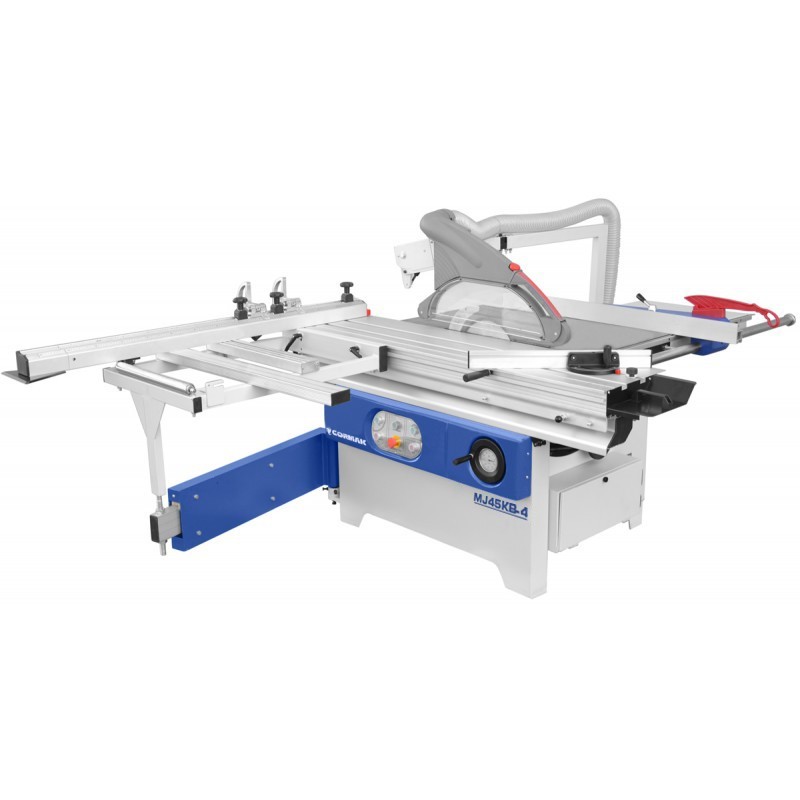
A panel saw is one of the essential machines in a joinery, furniture workshop and a workshop specialising in bespoke fittings. Its specifications determine the cutting speed, cutting accuracy, operator comfort and the quality of the finished components. When choosing a machine, the key factors to consider are motor power, structural stability, and the quality of the carriage, guides, fence and scoring blade. However, one of the most important specifications remains the length of the table.
A panel saw is one of the essential machines in a joinery, furniture factory and workshop specialising in bespoke fittings. Its specifications determine the cutting speed, cutting accuracy, operator comfort and the quality of the finished components. When making a choice, the motor power, structural stability, and the quality of the carriage, guides, stop blocks and scoring blade are all important factors. However, one of the most important specifications remains the length of the table.
The 2000 mm and 3200 mm variants are most commonly compared. Both can work well in furniture production, but they cater to different needs. A shorter table takes up less space and is more suitable for a smaller workshop. A longer table makes it easier to work with full-size furniture boards, provides better support for the material and increases cutting comfort. The choice should depend on the panel sizes, the type of orders, the number of cuts per day and the space available in the workshop.
Why is the length of the table so important?
The panel saw is responsible for guiding the material steadily during cutting. The longer the panel, the more important it is to have good support for the panel along its entire path. If the table is too short, the operator must exert more control over the material, use auxiliary tables more frequently, or work with the assistance of a second person.
In furniture production, it is not only the ability to cut the panel that counts, but also convenience and consistency. The panel must be guided evenly, without twisting or accidental movement. This is important when cutting cabinet bodies, fronts, worktops, cabinet sides, shelves and built-in components. Even a slight dimensional error can later complicate the process of edge-banding, drilling, assembly or fitting the entire structure.
2000 mm panel saw – for smaller workshops
A panel saw with a 2000 mm table is a practical choice for a small joinery, a contract workshop and companies producing made-to-measure furniture in smaller batches. It is ideal for producing shelves, drawers, fronts, shorter worktops, mouldings, small cabinet components and parts that have already been cut into smaller pieces.
The biggest advantage of the shorter table is that it saves space. A 2000 mm panel saw fits more easily into a confined space, and it is easier to arrange an edge-banding machine, a sawdust extractor, assembly tables and space for storing cut pieces around the machine. This is important in workshops where every metre of work surface counts.
However, it is important to bear in mind that standard furniture boards are often around 2800 mm long. Cutting them along the longer side on a 2000 mm table may be possible, but it is less convenient. The material has less support, so for longer pieces it is worth using an auxiliary table, supports or assistance from a second person. When cutting full panels on a daily basis, this can slow down work and increase operator fatigue.
The 2,000 mm model is a sensible choice if a company produces short runs, works mainly with smaller formats, has limited floor space, or does not cut full panels for most of the day. It is a good choice for a workshop that needs a precise machine but does not yet require the full capacity of a larger unit.
3200 mm panel saw – for full panel cutting
The 3200 mm table is designed for regular work with full-size laminated boards, MDF, plywood, veneered boards and other materials used in furniture production. The table’s length facilitates the stable feeding of panels approximately 2,800 mm long, which is particularly important in the production of kitchens, wardrobes, walk-in wardrobes, built-in units, office furniture and mass-produced components.
A longer table provides better support for the material. The operator can guide the panel more confidently, without having to balance the weight excessively. This reduces the risk of the panel shifting during cutting, improves repeatability and minimises the number of reworks. With a higher daily throughput of panels, this translates into shorter order lead times and reduced material waste.
3200 mm panel saws are well suited to workshops that cut full-size panels on a daily basis. In such conditions, the quality of the guide rails, a stable construction, an accurate rip fence and the ability to make precise adjustments are just as important as the table length itself. A good machine helps to maintain consistent dimensions and a clean cut edge.
However, a larger model requires adequate space. It is important to take into account not only the dimensions of the machine itself, but also the space in front of and behind the workstation. The operator must be able to feed the board freely, make the cut and collect the cut pieces. Setting the machine up in too confined a space compromises ergonomics and limits the benefits of purchasing a longer table.
What else should you check before buying?
Table length should not be the only selection criterion. Before purchasing, it is worth determining the maximum cutting length and width, the thickness of the boards to be processed, and the number of pieces cut per day. Motor power is also important. When dealing with heavier boards, hard materials and intensive use, a motor that is too weak may slow down the pace of work.
It is worth paying attention to the quality of the sliding table, the smoothness of movement, the stability of the rip fence, the ability to adjust the angle, and the ease of setting dimensions. A scoring blade is very important when working with laminated boards, as it minimises chipping on the underside of the material. In furniture production, this directly affects the appearance of the edges and reduces the need for touch-ups.
It is worth comparing the choice of saw with the plant’s entire production line. The saw works in conjunction with an edge-banding machine, a drill, a router, a sawdust extraction system and assembly tables. An efficient saw should not become a bottleneck due to a lack of space for collecting cut pieces, an inadequate extraction system or an unergonomic workstation layout.
When should you choose 2000 mm, and when 3200 mm?
A 2000 mm table is suitable where short cut pieces, smaller components, bespoke projects and limited workshop space are the norm. It is a good choice for businesses that require precise cutting but do not work with full panels on a daily basis.
A 3200 mm table is preferable when a workshop regularly cuts full sheets, manufactures kitchen units, wardrobes, fitted furniture or produces larger batches of components. It offers greater operator comfort, improved material guidance and greater consistency. For businesses with larger-scale production, it is often a safer investment for the long term.
Frequently asked questions
Can a 2000 mm table cut a 2800 mm panel?
It may allow this if the maximum cutting length of the specific model is sufficient. In practice, working with such a large panel on a shorter table is less convenient. The material requires good support, and for daily cutting of full-size panels, a longer table will be preferable.
Does a 3200 mm table always ensure greater accuracy?
It is not the length of the table alone that determines the result. A longer carriage improves the stability of a large panel, but the machine’s adjustment, the condition of the blade, the scoring blade, the guide and the operator’s experience are also crucial. A long workstation makes working with large formats more comfortable, but it requires correct setup.
Summary
A 2000 mm panel saw saves space and handles smaller components well. The 3200 mm model offers advantages when cutting panels to full size, for higher furniture production volumes and when working with long formats. When selecting a machine, you should assess not only the table length, but also the material format, workshop layout, workload, scoring blade, quality of the guides and the available space around the machine.
A well-suited panel saw improves production speed, enhances cutting precision and makes it easier to maintain consistent quality in the finished furniture.
