


Does wet or dry sandblasting produce better results? The answer depends primarily on the type of material being treated, the desired finish and the working conditions. Both technologies use abrasive material propelled at high pressure, but they differ in how the abrasive is fed and in the final result. Abrasive blasting is used in many sectors – from heavy industry and the automotive sector to the restoration of wooden and metal components.
Does wet or dry sandblasting produce better results? The answer depends primarily on the type of material being treated, the desired finish and the working conditions. Both technologies use an abrasive material propelled at high pressure, but they differ in the way the abrasive is fed and in the final result. Abrasive blasting is used in many sectors – from heavy industry and the automotive sector right through to the restoration of wooden and metal components.
Contents
- What is dry sandblasting?
- Wet sandblasting – when is it the right choice?
- Wet sandblasting booths versus traditional solutions
- How do you choose the right method for the type of material?
- Which machines work best in a workshop?
- Summary
What is dry sandblasting?
Traditional dry sandblasting relies on the use of compressed air and abrasive material without the addition of water. This method is highly effective for removing rust, old paint coatings or stubborn industrial dirt. Thanks to its high impact force, it works well on hard materials and surfaces requiring intensive cleaning. Many workshops use professional cabinet sandblasters, which ensure high precision and minimise the spread of dust.
However, a drawback of this technology can be the high levels of dust generated. When working in enclosed spaces, it is essential to ensure adequate ventilation and operator protection. Dry sandblasting can also cause surfaces to heat up more and have a more aggressive effect on delicate materials. Therefore, before starting work, it is worth checking which type of sandblasting grit is suitable for the specific application.
Wet sandblasting – when is it the right choice?
Wet sandblasting, which involves mixing the abrasive with water, is becoming increasingly popular. The addition of liquid reduces dust formation and lowers the temperature of the surface being treated, making the method safer for delicate components. Wet sandblasting is often chosen for treating aluminium, stainless steel, automotive parts and components requiring an aesthetic finish.
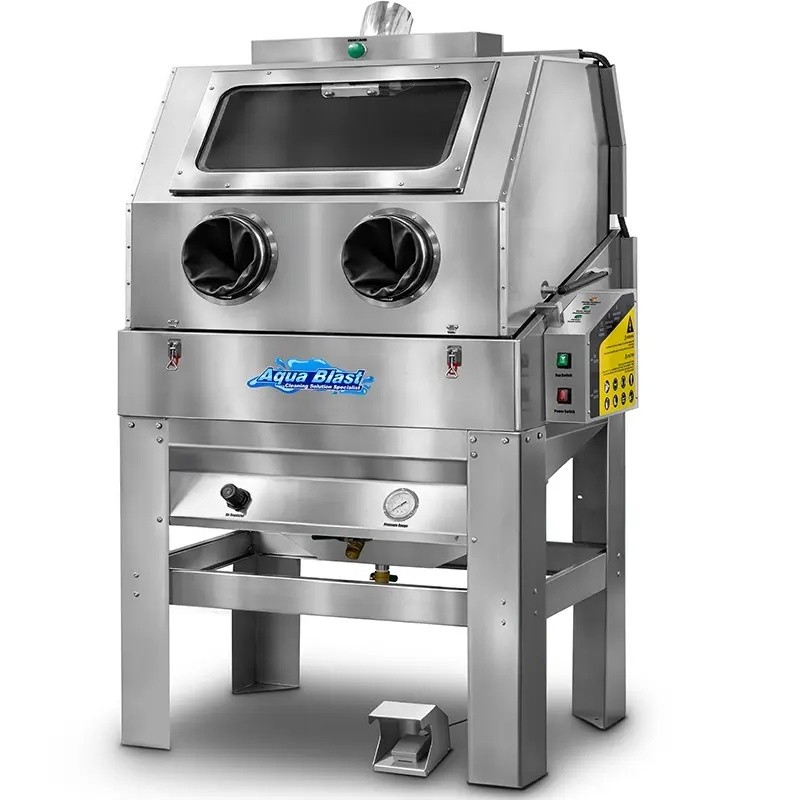
A major advantage of this technology is the ability to achieve a more uniform surface finish without the risk of excessive damage to the material. Wet sandblasting also works well for restoration work, where it is important to minimise the amount of dust in the air. For more demanding applications, a specialised wet sandblasting booth is used, which allows for the control of operating parameters and the efficient removal of the mixture of water and abrasive.
Wet sandblasting booths versus traditional solutions
A modern wet sandblasting booth allows work to be carried out in a more comfortable and cleaner manner than traditional dry blasting equipment. Thanks to its enclosed design, the operator has better control over the process, and the risk of abrasive spreading is minimised. This solution is used in both professional workshops and industrial facilities specialising in the reconditioning of parts.
It is worth noting that a wet sandblasting booth is particularly effective where a high-quality surface finish is essential. The workpiece is less prone to micro-damage, and the surface itself remains more uniform after treatment. In many cases, this technology also offers an alternative to traditional equipment such as cabinet washers, particularly when removing stubborn process-related contamination.
How do you choose the right method for the type of material?
The choice of the appropriate technology should depend on the type of surface being treated and the expected end result. Dry sandblasting is more effective on heavily corroded steel components and thick paint coatings. It is also more commonly used in heavy industry and construction. However, greater care must be taken when working with wood or more delicate surfaces. Guidance on how to sandblast wood and how to select the appropriate abrasive may be helpful.
Wet sandblasting is more suitable where the aesthetic quality of the finish and dust control are important. This technology is used, amongst other things, in the restoration of wheel rims, the machining of machine parts and the cleaning of aluminium components. When working with metal surfaces, it is also worth checking how to sandblast metal to avoid damage and achieve the desired surface texture.
Which machines work best in a workshop?
Choosing the right equipment has a huge impact on productivity and workplace safety. Professional sandblasting machines allow for precise control of operating pressure, the amount of abrasive and the processing parameters. In modern workshops, both traditional sandblasting machines and wet sandblasting solutions are increasingly being used. Carefully selected wet sandblasting booths enhance operator comfort and enable excellent finishing results to be achieved.
When deciding to purchase equipment, it is worth choosing solutions offered by a trusted manufacturer of industrial machinery. This makes it possible to tailor the equipment to the specific nature of the work and to receive technical and maintenance support. Well-chosen workshop equipment not only improves the quality of the finishing process but also saves time and reduces the consumption of consumables.
Summary
Dilemma: wet or dry sandblasting – there is no single universal answer. Each method has its own advantages and works best in specific applications. Dry sandblasting ensures high effectiveness and aggressive cleaning, whilst wet sandblasting helps to reduce dust and achieve a more aesthetically pleasing surface finish. The choice of the appropriate technology should take into account the type of material, the scale of the work and the expected end result. Carefully selected equipment and a professional approach to the treatment process enable high quality to be achieved and work efficiency to be increased in workshops and industry.
