


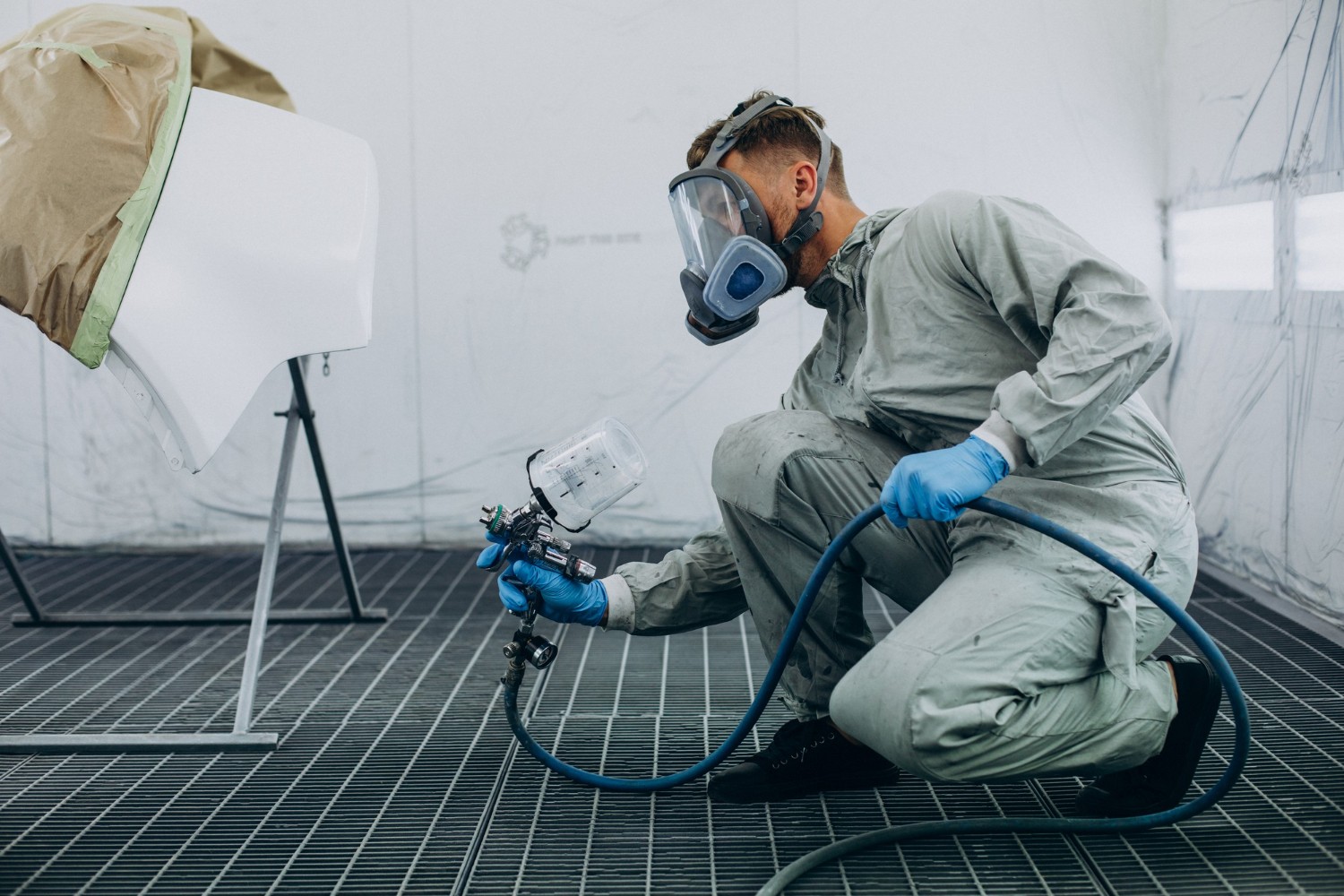
Spray painting allows you to achieve an even coat, a high-quality finish and significant time savings. However, even the best paint spray gun will not deliver the expected results without a suitably selected source of compressed air. This is precisely why so many people wonder which paint compressor to choose and what specifications to look out for when making a purchase. A suitably selected unit affects not only the comfort of the job, but also the quality of the paint and the durability of the finish.
Spray painting allows you to achieve an even coat, a high-quality finish and significant time savings. However, even the best paint spray gun will not deliver the expected results without a suitably selected source of compressed air. This is precisely why so many people wonder which paint compressor to choose and what specifications to look out for when buying one. A suitably chosen unit affects not only the comfort of the job, but also the quality of the paint and the durability of the finish.
Table of contents
- Why does the choice of compressor matter?
- Which compressor is suitable for spray painting?
- Which compressor should you choose for painting a car?
- The importance of compressed air drying
- Piston or screw compressor?
- Summary
Why does the choice of compressor matter?
When spray painting, a constant supply of compressed air at the correct pressure and flow rate is crucial. A compressor that is too small can cause pressure drops, uneven paint application and the need for frequent work interruptions. That is why the question of which compressor to use for painting is entirely justified for both hobbyists and professional painters.
Before purchasing, it is worth checking the air requirement of the paint spray gun. It is this parameter that determines which compressor is suitable for spray painting. In most cases, it is recommended to choose a unit offering at least 20–30 per cent more capacity than required by the spray gun.
Which compressor is suitable for spray gun painting?
Those carrying out minor painting jobs most often choose piston compressors fitted with a tank capacity of 50 to 100 litres. When painting items of furniture, fences or individual car parts, such equipment is usually sufficient.
However, if you plan to paint larger surfaces on a regular basis, it is worth analysing more carefully which paint sprayer compressor will ensure continuous operation without downtime. Effective air delivery is of key importance and should be at least 300–400 l/min for most HVLP and LVLP spray guns.
Which car paint compressor should you choose?
Painting an entire vehicle requires significantly greater equipment capacity. Anyone considering which compressor is best suited for car painting should focus primarily on the air delivery rate and the tank capacity.
For amateur car painting, compressors with a flow rate of at least 400–500 l/min and a tank capacity of 100–200 litres are recommended. This ensures stable spray gun operation without sudden drops in pressure.
If you’re wondering which car painting compressor is best for frequent use, it’s worth considering units designed for workshop use, which offer smooth operation and greater durability.
Which car paint sprayer compressor is best suited to a workshop?
Professional paint shops and bodywork and paint workshops most commonly use screw compressors. These ensure continuous operation, high efficiency and significantly lower running costs during intensive use. CORMAK’s range includes modern solutions designed for workshops and industrial use.
Which car paint compressor should you choose for professional use? It is worth considering units with an effective output of at least 600–800 l/min. Where there are several paint booths, these requirements may be even higher.
In larger facilities, extensive systems based on industrial compressors are also frequently used, ensuring stable operating parameters for the entire compressed air system. As a manufacturer of industrial machinery, CORMAK offers solutions tailored to the various needs of workshops and production plants.
The importance of compressed air drying
Many users focus solely on the compressor’s specifications, overlooking air quality. However, moisture present in the system can cause paint defects, blistering and discolouration.
Therefore, when choosing a unit, it is worth reading the article: ‘Why a compressor needs a dehumidifier’. In professional installations, a compressor air dehumidifier is also becoming standard, as it effectively removes moisture from the compressed air. CORMAK offers both stand-alone dryers and compressor units integrated with air treatment systems.
Piston or screw compressor?
If paintwork is carried out only occasionally, a piston compressor will be a cost-effective and adequate solution. However, for regular use, screw compressors are by far the better choice, as they provide stable operating parameters, high efficiency and the ability to run for many hours without interruption. CORMAK’s range includes a wide selection of such units designed for workshops and industrial use.
Summary
There is no single, universal solution for all users. The answer to the question of which compressor to choose for painting depends primarily on the scope of the work to be carried out, the type of spray gun and the frequency of use. For occasional use, piston models are sufficient, whilst professional paintwork requires more powerful solutions.
If the aim is to determine which compressor is best for car painting, it is worth considering not only the performance and tank capacity, but also the quality of the compressed air and the presence of a dehumidifier. Only this combination guarantees professional painting results.
