


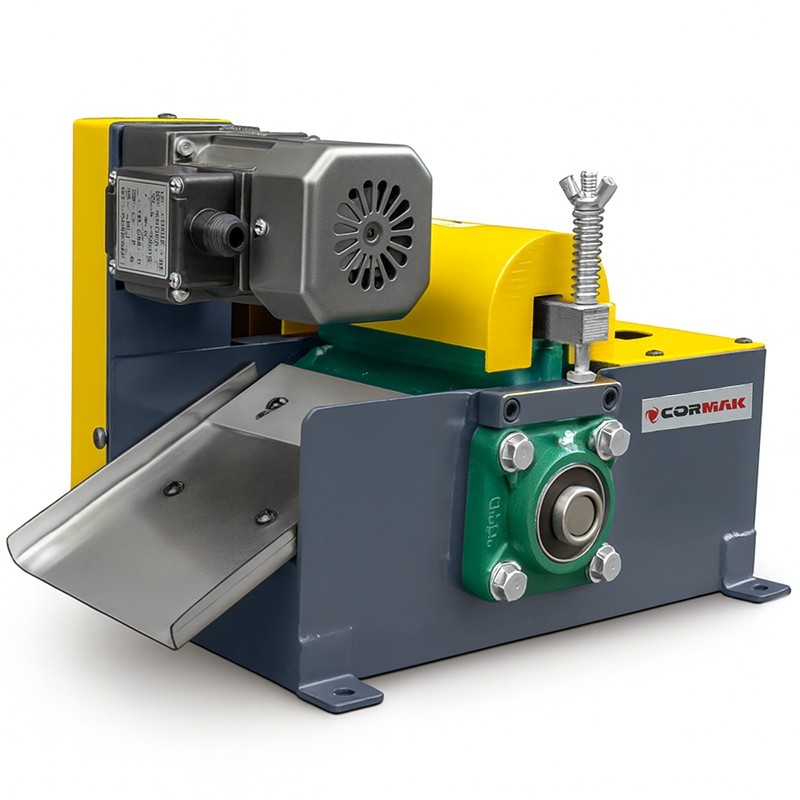
A magnetic coolant separator is a device used in metalworking to separate ferromagnetic particles from the cooling and lubricating fluid. It helps to reduce the amount of steel and cast iron swarf circulating in the system, thereby supporting process stability, system cleanliness and the protection of selected machine components.
A magnetic coolant separator is a device used in metalworking to separate ferromagnetic particles from the cooling and lubricating fluid. It helps to reduce the amount of steel and cast iron swarf circulating in the system, thereby supporting process stability, system cleanliness and the protection of selected machine components.
However, it is not a universal filter for all types of contamination. A magnetic separator primarily acts on particles attracted by a magnetic field. In the case of aluminium, brass, plastics, non-metallic particles or very fine contaminants that are not magnetically captured, an additional filtration stage is often required.
Contents
- What is a magnetic separator for coolant?
- How does a magnetic separator work?
- What contaminants does it remove?
- Design of the unit
- Key benefits
- Applications in metalworking
- Magnetic separators versus other filtration methods
- How to select a separator for coolant?
- Operation and maintenance
- FAQ
What is a magnetic separator for coolant?
A magnetic coolant separator is a component of a process fluid filtration system. It uses permanent magnets or electromagnets to capture ferromagnetic particles from the flowing coolant. These are most commonly steel and cast iron filings, as well as fine sludge generated during machining or grinding.
The device can operate as a stand-alone unit or as the first stage of a more complex filtration system. In such a system, the magnetic separator removes magnetic contaminants prior to fine filters, paper filters, fibre filters, hydrocyclones or other technologies selected for the process.
This solution is primarily used in CNC machine tools, lathes, milling machines, grinders and machining lines where ferromagnetic materials are processed.
How does a magnetic coolant separator work?
The principle of operation is based on a magnetic field. Contaminated coolant flows through the magnet’s field, and ferromagnetic particles are attracted to the separator’s working surface. The purified fluid is then directed to a tank, the next stage of filtration, or directly back into the machine’s circulation system.
Step-by-step process
- Contaminated coolant enters the filtration system.
- The fluid flows through the magnetic field zone.
- Ferromagnetic swarf and sludge are captured by the magnetic surface.
- A rotating drum, roller, conveyor belt or other mechanism transports the collected contaminants to the discharge zone.
- A scraper removes the sediment into a container or a waste collection system.
- The treated coolant is returned to the circulation system.
In many systems, the process operates continuously. However, the design of the unit depends on the manufacturer, the required flow rate, the type of coolant and the particle size. Separators with a rotating magnetic drum are popular, amongst others, but this is not the only option available on the market.
What types of contaminants does a magnetic separator remove?
A magnetic separator is designed to capture contaminants with magnetic properties. It works best when processing materials such as steel and cast iron.
Typical magnetic contaminants
- steel swarf;
- cast iron particles;
- ferromagnetic sludge and dust generated during grinding;
- fine metallic particles attracted by the magnetic system used.
What does a magnetic separator not remove effectively?
- aluminium, brass and most non-ferrous metal shavings;
- plastics, rubber and fibres;
- contaminating oil, bacteria and chemical contaminants in the coolant;
- all very fine particles, provided they do not possess the appropriate magnetic properties.
Therefore, when machining aluminium or mixed materials, it is worth considering a multi-stage system. The magnetic separator can then operate in conjunction with a mechanical filter, a paper filter, a hydrocyclone, a centrifuge or another solution tailored to the required level of fluid purity.
Design of a magnetic coolant purification system
A typical magnetic separator consists of several components responsible for fluid flow, particle capture and the automatic discharge of contaminants.
- magnetic system – a drum, roller, plate or other component generating a magnetic field;
- housing and flow channels – these guide the coolant through the separation zone;
- drive – in automatic versions, this rotates the drum or moves the element that transports the sludge;
- scraper – mechanically removes accumulated contaminants;
- treated liquid outlet – directs the coolant to the next stage or a tank;
- sludge container – collects separated swarf and sludge.
The choice of design should take into account the viscosity of the fluid, temperature, flow rate, concentration of contaminants, type of material being machined and the required coolant purity class.
Key benefits of magnetic coolant filtration
More stable machining conditions
Reducing the amount of swarf circulating in the system can help maintain more predictable operating conditions. This is particularly important in grinding and precision machining processes, where contaminants can affect surface quality and coolant performance.
Protection of specific components
Removing ferromagnetic particles reduces the load on the pump, valves, nozzles and other components of the coolant circuit. It does not eliminate the need for maintenance, but it can reduce the risk of excessive wear caused by the presence of abrasive contaminants.
Less filter media
The magnetic separator does not use conventional paper or non-woven filter elements to capture magnetic particles. This does not mean it is maintenance-free: the unit requires regular inspection, cleaning, sludge removal and maintenance in accordance with the instructions.
Support for coolant management
Effective filtration can extend the service life of the coolant and reduce the frequency of tank cleaning. The actual effect depends on the overall coolant management system, including concentration control, water quality, the presence of foreign oil and microbial activity.
The use of magnetic separators in industry
Magnetic coolant separators are particularly useful in processes that generate fine particles of iron, steel and cast iron.
- CNC machining of steel and cast iron;
- turning and milling of ferromagnetic components;
- flat, roller and tool grinding;
- honing and finishing operations;
- mass production involving large quantities of fine metallic sludge;
- central coolant systems serving multiple machines.
Magnetic separators versus other coolant filtration methods
| Method | Best at removing | Strengths | Limitations |
|---|---|---|---|
| Magnetic separator | Ferromagnetic particles | Continuous operation, no conventional filter media | Limited effectiveness for aluminium, brass and non-magnetic contaminants |
| Paper or non-woven filter | Various solid particles, including non-magnetic ones | Potential for finer filtration depending on the medium | Consumes filter material and requires replacement |
| Hydrocyclone | Particles of suitable mass and density | Operates without cartridges; useful in certain processes | Effectiveness depends on flow parameters and the nature of the contaminants |
| Centrifuge | Fine particles and some contaminants, depending on the configuration | Can ensure high liquid purity | Greater complexity, capital costs and maintenance requirements |
In many plants, the best results are achieved by combining several technologies. A magnetic separator can relieve the burden on fine filtration, whilst a second stage can capture non-magnetic particles and very fine fractions.
How to select a magnetic separator for coolant?
The selection should be based on a process analysis, not just the machine’s dimensions. Before making a choice, it is worth determining:
- flow rate – the volume of coolant flowing through the system in a given time;
- the type of material being machined – the proportion of steel and cast iron relative to aluminium or non-ferrous metals;
- the type of contaminants – swarf, dust, sludge, fine abrasive particles;
- type of fluid – water-based emulsion, machining oil or other medium approved by the separator manufacturer;
- required coolant purity – depending on the process and the expected surface quality;
- installation location – on a single machine tool, connected to a central tank or in a separate filtration system;
- access for servicing – the ability to safely remove sludge and carry out maintenance.
It is also worth checking whether the separator is compatible with the existing pump, tank, cooling system and any further stages of filtration planned.
Operation and maintenance
For the system to operate effectively, regular maintenance in accordance with the manufacturer’s recommendations is essential. Even a solution without filter media requires monitoring.
- regularly remove accumulated sludge from the tank;
- check the condition of the scraper, drive and working surfaces;
- check that the flow channels and pipes are unobstructed;
- monitor the quality of the coolant, the emulsion concentration and the level of non-magnetic contaminants;
- clean the tank and the system in accordance with the maintenance schedule;
- use the protective equipment required when handling coolant and metal waste.
FAQ – frequently asked questions
Does the magnetic separator work when machining aluminium?
It does not effectively remove typical aluminium swarf, as aluminium is not a ferromagnetic material. In such cases, mechanical filtration, a hydrocyclone, a centrifuge or another system suited to the process is usually required.
Does a magnetic separator replace every coolant filter?
No. It is effective against magnetic particles, but does not replace filtration for non-magnetic contaminants, foreign oil or microbiological issues. In many systems, it constitutes the first stage of filtration.
Does the unit require consumables?
A typical magnetic separator does not use disposable filter cartridges to capture magnetic swarf. However, it does require operation, periodic maintenance and inspection of its mechanical components.
Where is the best place to install the separator?
It can operate on a single machine or within a central coolant system. The optimal location is determined based on fluid flow, available space, the method of sludge removal and process requirements.
Summary
A magnetic coolant separator is an effective tool for removing ferromagnetic particles from process fluids. It helps to reduce the amount of steel and cast iron swarf in the circuit, helps to protect the cooling system and can improve machining conditions.
The best results are achieved when the separator is selected to suit the type of material, flow rate, nature of the contaminants and the required coolant purity. When machining non-magnetic materials or where high quality standards are required, it is advisable to combine it with subsequent filtration stages.
