


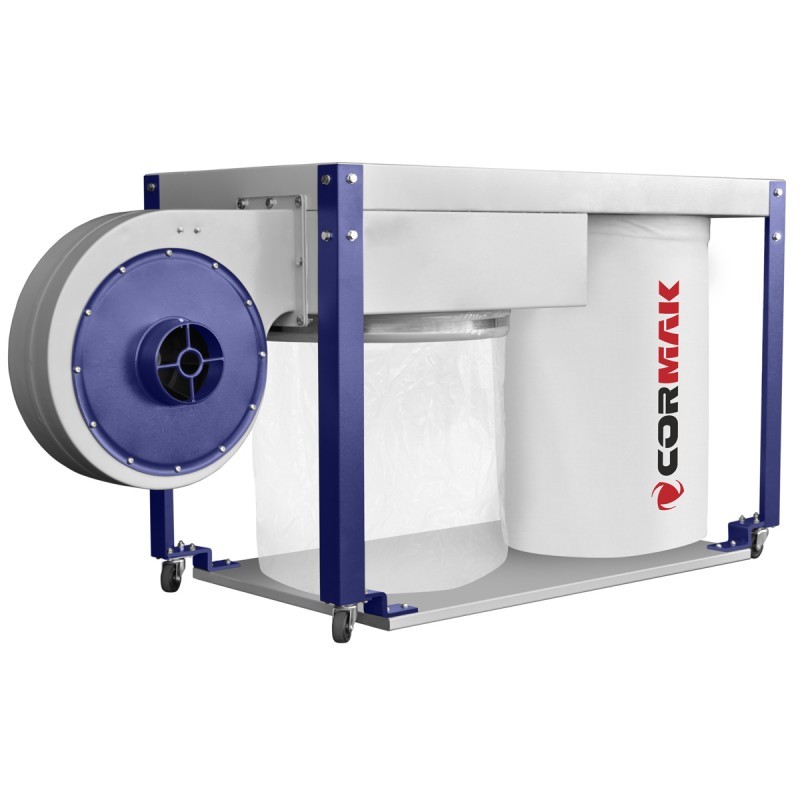
A good dust extractor keeps your workspace clean and safe. Learn how to choose the right model, understand key parameters, and find out which extractor type best suits your workshop or production line.
Which dust extractor should I buy? This is a common question when setting up a woodworking shop or upgrading an existing facility. Choosing the right extractor improves air quality, safety, and efficiency. Below we explain what to consider before making your purchase.
- Why dust extraction is important
- Key factors when choosing
- Types of dust extractors
- Benefits of a good extractor
- Summary
Why dust extraction is important
Woodworking produces chips and fine dust, which can harm health and damage machinery. A dust extractor removes contaminants directly at the source, keeping the air clean and ensuring safer, more efficient work.
Key factors when choosing
- Airflow capacity – the more dust you generate, the higher the airflow you need.
- Filter type – class M or H filters capture fine dust and protect health.
- Construction and mobility – choose mobile units for small workshops, stationary for large ones.
- Compatibility – ensure you can connect all machines as needed.
- Ease of cleaning – easy filter replacement and bin emptying saves time.
Types of dust extractors
- Mobile extractors – portable and compact, ideal for small shops.
- Stationary extractors – designed for continuous operation.
- Central systems – connect multiple machines in large facilities.
- Cyclone systems – separate coarse chips from fine dust for higher efficiency.
Benefits of a good extractor
- better air quality and comfort,
- reduced health risks,
- fire safety improvement,
- longer machine lifespan,
- cleaner, more efficient workspace.
Summary
Choosing the right dust extractor is an investment in health, safety, and efficiency. CORMAK offers powerful, durable extraction systems for workshops of any size.
