


In today’s article, we offer advice on which compressor to choose for a plasma cutter. Plasma cutters are exceptionally effective tools for cutting metal, and their performance depends largely on the quality and specifications of the compressor used. Choosing the right compressor is crucial for ensuring the cutter operates optimally, achieving the highest cutting quality and ensuring the machine’s longevity. Which compressor should you invest in for your plasma cutter? Read on to find out.
In today’s article, we offer advice on which compressor to choose for a plasma cutter. Plasma cutters are exceptionally effective tools for cutting metal, and their performance depends largely on the quality and specifications of the compressor used. Choosing the right compressor is crucial for ensuring the cutter operates optimally, achieving the highest cut quality and ensuring the machine’s longevity. Which compressor should you invest in for your plasma cutter? Read on to find out.
What is a compressor?
A compressor is a device that compresses air, increasing its pressure. In the case of plasma cutters, the compressor supplies compressed air, which is essential for generating plasma – ionised gas capable of precisely cutting metals. Which compressor is best for a plasma cutter? It is worth familiarising yourself thoroughly with the subject and bearing in mind that choosing the wrong compressor can lead to the machine operating inefficiently, resulting in poorer cut quality and increased consumption of consumables.
Types of compressors for plasma cutters
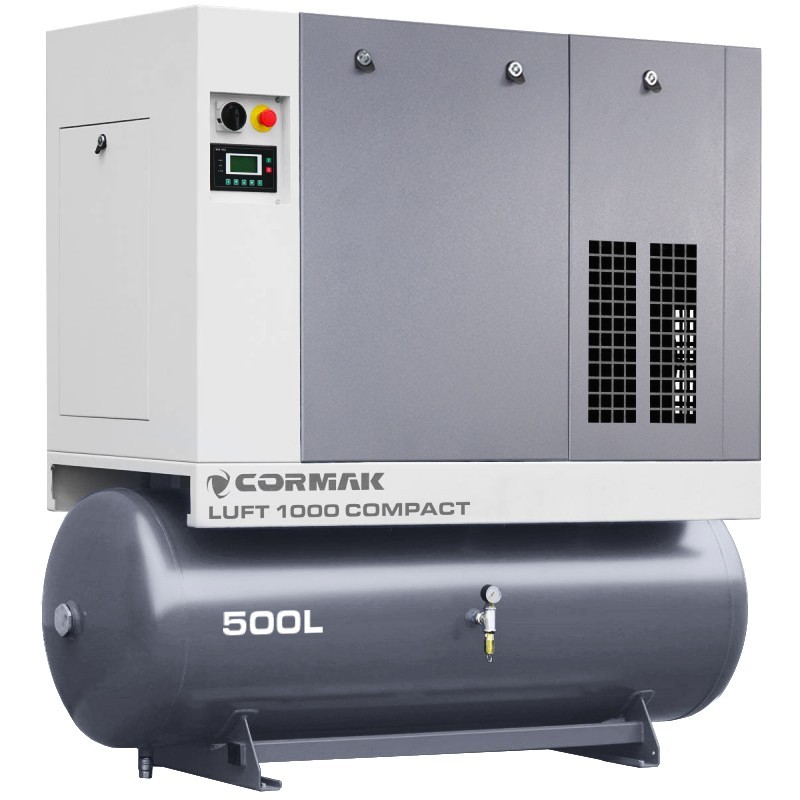
At CORMAK, we offer industrial compressors with features designed to meet a wide range of user needs. Below, we outline the characteristics of two types of compressors to help you decide which plasma compressor to choose for the best results.
Screw compressors
Screw compressors are widely used in industrial applications due to their high efficiency and reliability. They operate on the principle of two screw rotors which, as they rotate, draw in and compress air. This type of compressor is characterised by several key features:
-
efficiency and continuous operation – screw compressors can operate continuously for long periods, making them an ideal choice for large manufacturing plants,
-
low noise emissions – thanks to screw technology, the compressors are relatively quiet, which improves working conditions in the plant,
-
energy efficiency – modern screw compressors are equipped with variable speed drive (VSD) systems, which adjust the operating speed to the current air demand, thereby saving energy.
Scroll compressors
Scroll compressors, although less popular than screw compressors, are valued for their performance and compact dimensions. They operate on the principle of two spiral elements, one of which remains stationary whilst the other rotates, compressing the air. It is worth learning about their advantages to know which plasma compressor to choose:
-
compact size and light weight – scroll compressors are smaller and lighter than screw compressors, making them the ideal choice for mobile plasma cutters and small workshops where space is limited,
-
low maintenance costs – thanks to their simpler design and fewer moving parts, scroll compressors require less maintenance and are less prone to breakdowns,
-
Quiet operation and high air purity – like screw compressors, scroll models operate quietly. Additionally, the compressed air is very clean.
Specifications of compressors for plasma cutting
When deciding which compressor to choose for a plasma cutter, several key parameters should be analysed.
-
Capacity (CFM)
CFM (cubic feet per minute) is a measure of a compressor’s capacity. A higher CFM rating indicates a greater volume of air delivered, and thus greater efficiency.
-
Working pressure (PSI)
Plasma cutters require a suitable working pressure, typically in the range of 90–120 PSI. It is important that screw compressors can maintain a constant pressure within this range.
-
Tank capacity
A larger tank capacity allows for a more stable air supply. For plasma cutters, tanks with a capacity of at least 200 litres are recommended.
Tips on compressor maintenance
Choosing the right compressor for a plasma cutter is just the start. Once you have the ideal unit, it is also worth remembering that regular inspections and cleaning are essential for maintaining the compressor’s longevity, and changing the oil and filters at regular intervals in accordance with the manufacturer’s recommendations will ensure the unit operates optimally.
To summarise the considerations on which compressor to choose for plasma cutting – we already know that a thorough analysis of the plasma cutter’s technical specifications is essential, as is matching it with the appropriate unit. We invite you to explore our full range; we offer, amongst other things:
Which plasma compressor should you ultimately choose? We’d be happy to advise you. Industrial machinery manufacturer CORMAK invites you to get in touch and place your orders.
