


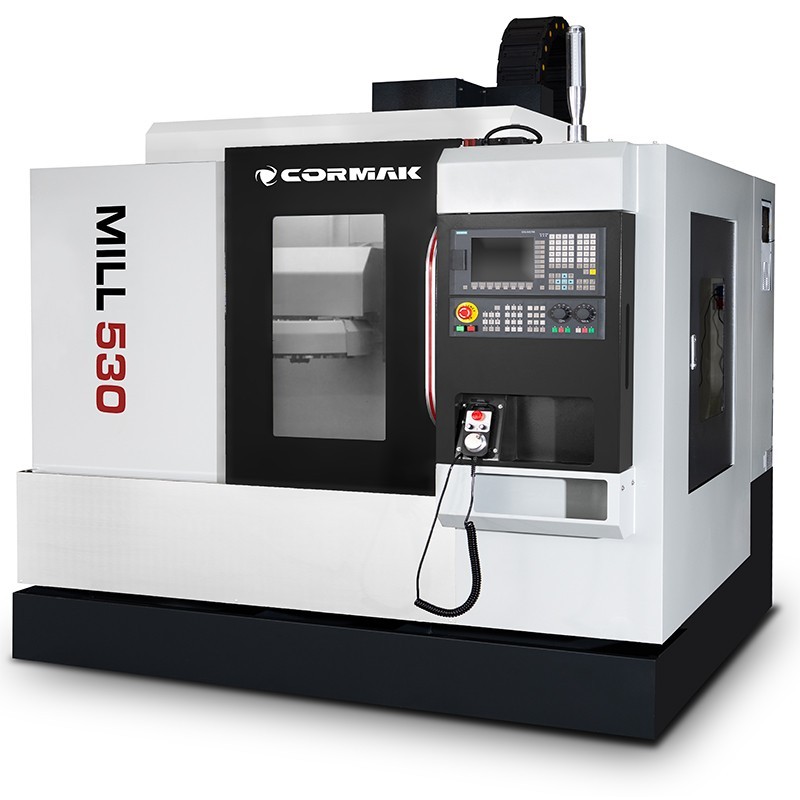
To understand what a CNC machining centre is, imagine a versatile machine capable of performing a wide range of metal and woodworking processes with precision. When properly programmed, such a machine can mill, drill, tap and ream, all with remarkable precision. This advanced machine is a key piece of equipment in many modern workshops, and thanks to its functionality, it is possible to carry out even the most complex tasks. And how does it differ from a CNC milling machine? We explain everything below.
To understand what a CNC machining centre is, imagine a versatile machine capable of performing a wide range of metal and woodworking processes with precision. When properly programmed, such a machine can mill, drill, tap and ream, all with remarkable precision. This advanced machine is a key piece of equipment in many modern workshops, and thanks to its functionality, it is possible to carry out even the most complex tasks. But how does it differ from a CNC milling machine? We explain everything below.
CNC milling machine – what are its functions?
CNC milling machines are versatile industrial machines capable of performing a wide range of machining operations with high accuracy. Their primary function is milling, a process in which a rotating tool removes material from the surface of the workpiece to create the desired shapes and details. A CNC milling machine uses an advanced computer numerical control (CNC) system, which allows for precise programming of the tool’s movements. This enables the operator to programme the machine, which then performs the task automatically.
The basic functions of CNC milling machines include:
- milling flat and complex surfaces;
- drilling holes of various diameters and depths;
- threading, i.e. cutting threads on component surfaces;
- reaming, which allows for the precise enlargement of existing holes.
As a result, CNC milling machines are indispensable in the production of high-precision parts, such as automotive components, machine parts and furniture components.
CNC machining centre – advantages and applications
A CNC machining centre is a more advanced version of a milling machine, offering even greater production capabilities. In addition to milling, this machine can perform operations such as drilling, threading or reaming within a single machining cycle. This is a key advantage that significantly increases production efficiency.
It is difficult to list all the advantages of a CNC machining centre. Its versatility allows for a reduction in the number of machines required in the production process – a single machine performs many different operations. The precise CNC control system minimises the risk of errors, which translates into greater machining accuracy and less material waste. Another advantage is the ability to automate the process, which in turn leads to reduced labour costs and shorter production times.
CNC machining centres are used across many industries. They are particularly valued in the automotive sector, where they enable the production of precise, complex parts at high speed and with high repeatability. They also play an important role in the aerospace industry, in tool manufacturing and in the furniture sector. It is worth considering investing in a CNC machining centre, which significantly improves production efficiency and quality.
The difference between a CNC machining centre and a CNC milling machine
Although CNC milling machines and CNC machining centres often perform similar functions, the differences between these machines are easy to spot. CNC milling machines are devices whose functions focus mainly on milling, whilst machining centres offer a much wider range of machining capabilities. One of the most important distinguishing features is the number of operations that can be performed without the need to interrupt the work.
The difference between a CNC machining centre and a CNC milling machine also lies in the automation and complexity of the processes. A milling machine often requires repeated positioning of the workpiece and tool changes, which increases the time needed to complete the task. A machining centre, on the other hand, allows for the execution of multiple operations without interrupting the work. For example, once milling is complete, the machine automatically proceeds to drilling or threading – this saves time and eliminates the need for manual intervention in the process.
CNC machining centres are usually equipped with advanced automatic tool storage systems. This feature significantly speeds up operations and minimises downtime. With CNC milling machines, the operator often has to change tools manually. This is why CNC machining centres are the ideal choice for companies seeking maximum automation and optimisation of production processes.
Summary
Investing in the right industrial machinery is the key to success for any company involved in material machining. CNC milling machines and CNC machining centres are highly versatile machines that can significantly improve production efficiency. CNC milling machines offer precise milling and other basic machining operations, whilst CNC machining centres provide even greater capabilities by automating multiple processes within a single cycle.
The difference between a CNC machining centre and a CNC milling machine is clear – a machining centre offers greater flexibility and productivity, particularly in the production of complex and intricate components. As a result, companies that invest in such equipment can fulfil orders more quickly whilst improving the quality of the final product. As a manufacturer of industrial machinery, we offer both milling machines and machining centres in various configurations. We invite you to explore the models available in our online shop.
